
One single property
For the €400k and €800k tiers, the investment must be in one property; you can no longer combine several to reach the threshold.


One of the most established routes available today, and after the 2024–2025 reforms, one of the last of its kind in the EU. This page explains exactly how it works in 2026: what you can invest in, who qualifies, what it costs, and the steps we walk every client through, from first enquiry to residence card in hand.

We have spent years guiding investors through both sides of this journey: the property purchase and the residence-permit application. Our approach has always been the same: get the investment right first, and the residence permit follows naturally.
A residence card is never the goal on its own. A sound property and a clean, compliant transaction are. Everything on this page is written with that order in mind.
“Golden Visa” is the popular name for Greece’s Permanent Investor Residence Permit. It is not a visa in the literal sense. It is a renewable residence permit granted to non-EU nationals who make a qualifying investment, most commonly through real estate.
Once granted, it gives you and your family the right to live in Greece, travel freely within the Schengen Area, and renew indefinitely for as long as you hold the qualifying investment. There is no requirement to live in Greece to obtain or keep the permit.

The program runs under the Greek Migration Code (Law 5038/2023), which replaced the older 2014 framework. Thresholds and property rules were significantly reformed by Law 5100/2024, with further clarifications through Ministry circulars in 2026. Any guidance written before 2024, including the old flat €250,000 figure that still circulates online, is out of date.
“The single most common reason a Golden Visa fails is a property purchase that was never structured to meet the permit’s requirements.”
Kostas walks through the tiers, the steps, and the questions clients ask most. Press play to watch, or visit the channel for more.
Visit the channelThe permit is built around a single principal investor: the person named on the property purchase. Through that person, residence permits extend vertically: upward to parents, and downward to children. They do not extend sideways. Siblings cannot be included on the same application.
This is the part that has changed the most. Greece no longer applies a single nationwide figure. The minimum real-estate investment now depends on where the property is and what type it is. Select a tier to see where it applies.
The familiar figure still exists, but it is now category-based, not geography-based.
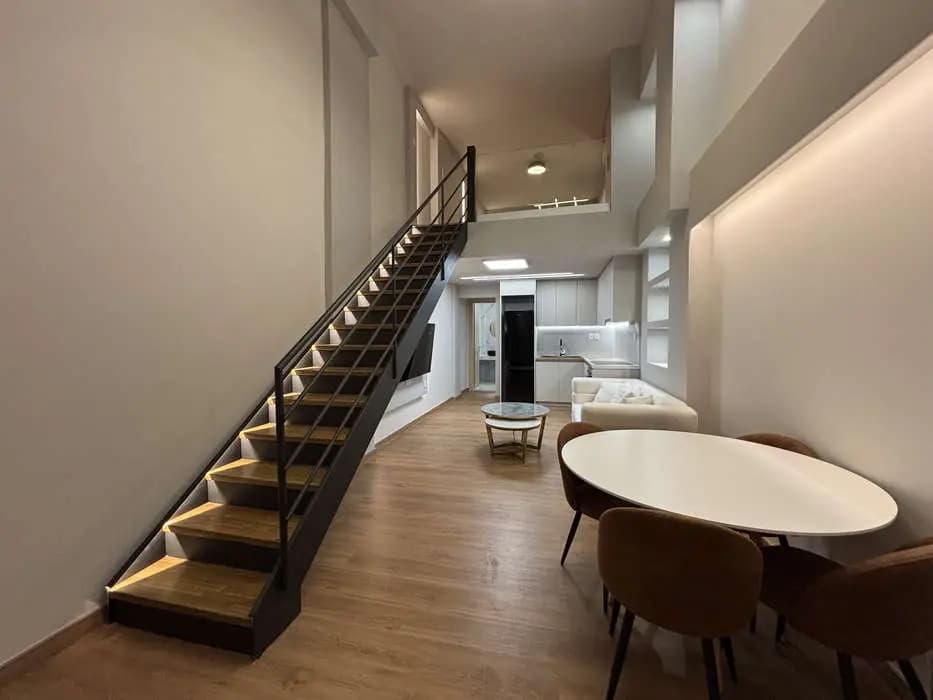
The standard threshold for property anywhere outside the high-demand zones.
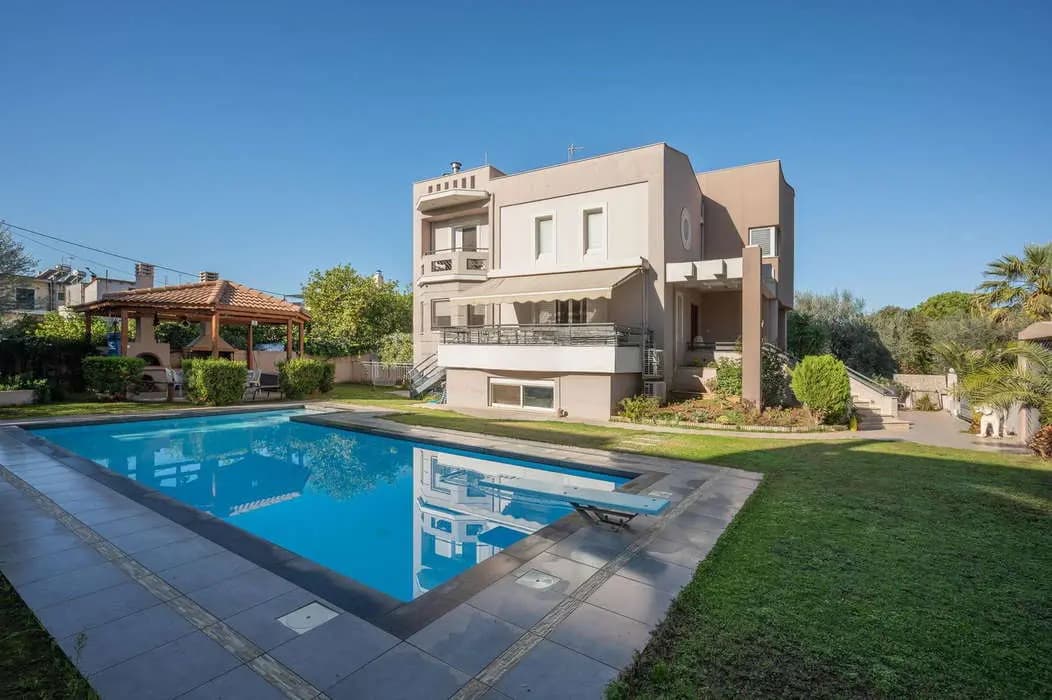
Greece's most sought-after areas, defined by region rather than by city centre.
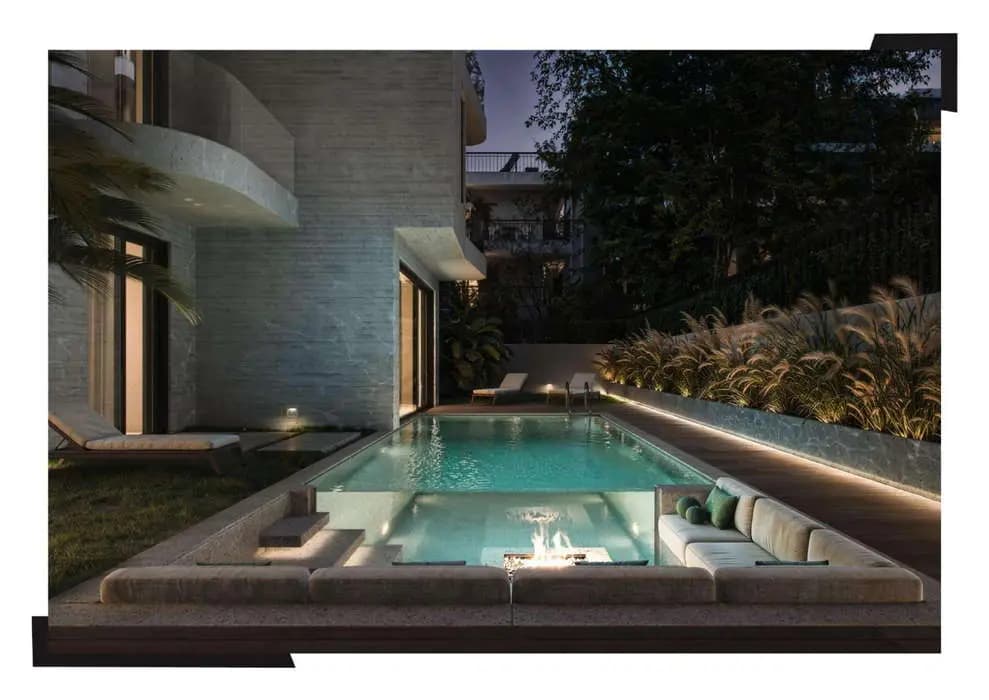
For the €400k and €800k tiers, the investment must be in one property; you can no longer combine several to reach the threshold.
Built property under the €400k and €800k tiers must have a main living area of at least 120 square metres. (Not required for land or the €250k tier.)
Property under the new €400k and €800k tiers cannot be used for Airbnb-style letting. Breach carries fines up to €50,000 and possible revocation. Long-term rental income is permitted.


Here is how a typical real-estate Golden Visa proceeds. In practice, several of these steps run in parallel, and most can be completed without you being physically present, through a power of attorney granted to your lawyer.
We start with your goals: budget, preferred region, whether you'll use the property, rent it long-term, or hold it as an asset. This determines your tier and zone, and shapes the search. Settling on more than one candidate property at this stage strengthens your negotiating position and avoids repeat trips.
Mandatory before you can buy, bank, or connect utilities. Non-residents register through the Foreigners' Tax Office, which preserves certain non-resident exemptions. Greek law requires a local fiscal representative (antiklitos), with no cost or liability to either party. Obtainable by power of attorney, without travelling.
Strongly recommended: it receives any rental income and lets you pay via a same-day bank cheque drawn in the seller's name, the safest, cleanest method for the residence-permit file. Funds should be transferred from your own account abroad; never bring large amounts of cash into the country.
Before any money moves, two independent checks protect you: legal due diligence (your lawyer reviews title at the land registry, confirms clean ownership, checks debts and encumbrances) and a technical inspection (a civil engineer confirms value, planning compliance, and that the property is not in a forest, archaeological, or protected zone). We advise against any deposit until both are complete.
There is no “title deed” as some countries know it. Ownership transfers through a property sale contract executed before a notary chosen by the buyer. On signing day, the bank cheque is handed over and its details recorded in the contract itself, which matters for the permit file. Your lawyer registers the transaction immediately: the recognised owner is the first to register.
The purchase and the permit are two separate processes. Once the purchase completes, your lawyer assembles the residence-permit file for you and every eligible family member and submits it on a scheduled appointment with the Ministry. Applications can be directed to less-congested offices for faster dates.
Applicants attend in Greece to give biometric data (fingerprints and photograph). A confirmation document, the “blue receipt”, lets you remain in and travel from Greece while the card is produced. The residence card is issued for five years and renews for further five-year periods as long as you hold the qualifying investment.
Beyond the investment, you should budget for transaction and application costs. The figures below mirror our Golden Visa cost calculator: the same rates and fixed fees it uses. Where Greek VAT (24%) applies, it is noted.
Our calculator estimates total costs and your eligible tier from a target budget and region.
Open the Golden Visa calculator →This is residency-by-investment, not citizenship-by-investment. Citizenship can be pursued later only by meeting standard naturalisation requirements: roughly seven years of actual residence, genuine physical presence, and tests on the Greek language, history, and culture. The investment alone does not shorten them.
Non-EU buyers face a special permit requirement (and long delays) for property in certain border areas and on islands near neighbouring countries. We advise against them, both for the legal friction and because they tend to be poor commercial choices.
Never pay a deposit until the legal and technical checks are complete and the property is confirmed problem-free or easily correctable.
If you buy under the €400k or €800k rules, Airbnb-style letting is prohibited and heavily penalised. Plan your rental strategy around long-term leasing from the start.
The investor residence permit regime in Greece, commonly known as the Golden Visa, is currently governed under the Migration Code.
Primary legislation:
Explanatory note:
Should it be required, the following may each be explained separately from a legal standpoint within the framework of the system currently in force:
Greece’s residence-by-investment (Golden Visa) program grants residency rights to foreign nationals who make a qualifying investment in the country. Under the new regulations introduced in 2024, the required investment amount varies by region.
In high-demand areas—particularly Athens and Attica, Thessaloniki, Mykonos, Santorini, and islands with populations over 3,100—the minimum investment is €800,000. The threshold was raised in these areas due to high demand and increasing property prices and rents.
In other regions, outside major cities and tourist destinations, the minimum investment amount is €400,000. This provides investors with a lower-cost alternative while offering the same residency rights.
In certain cases, such as converting a commercial property into residential use or restoring a neoclassical building, the minimum investment amount remains €250,000. This exception is intended to encourage conversion projects and bring neoclassical buildings and other investment properties back into economic use.
To obtain a residence permit, the following criteria must be met: (a) The applicant must own and maintain possession of their real estate investment. (b) For jointly owned properties valued at €250,000, residence permits are granted only if the owners are spouses with undivided ownership. Otherwise, each joint owner must invest a minimum of €250,000 (i.e., two investors must jointly purchase real estate of a minimum value of €500,000). (c) If the property is acquired through a legal entity, the applicant must own 100% of the company shares. (d) Residence permits are also issued if the applicant, either directly or through a legal entity, owns multiple properties with a total investment value of at least €250,000. (e) In cases where third-country citizens lease hotel accommodations or furnished tourist residences for at least 10 years in integrated tourist resorts, with a minimum lease value of €250,000, the contract must stipulate a single payment equivalent to ten years' worth of leasing. In all the above cases, the property's value is determined by the purchase contract — the objective or assessed value is irrelevant unless it matches the amount specified in the contract.
The first step to acquire a residence permit as a real estate property owner is obtaining an entry visa. An entry visa is a type of authorization issued by the Greek authorities, which entails visiting Greece at least once before applying, even if only for a single day.
According to Law 4251/2014, any third-country citizen legally entering Greece with any type of entry visa or holding legal residency in the country, irrespective of their status or residence permit type, is eligible to apply for a residence permit. Once issued, the residence permit eliminates the necessity for an entry visa for the duration of its validity.
The residence permit granted is permanent, yet renewal is necessary every five (5) years, with the option to renew for the same duration and as often as requested by the applicant.
To renew the permit, certain conditions must be met: the applicant must maintain full ownership and possession of the real estate property, and the relevant leases or contracts must remain in effect.
There is no requirement for applicants to stay a minimum duration in order to retain or renew their residence permits. However, if the real estate property is sold to another third-country citizen while the residence permit is still valid, the new owner becomes eligible for a residence permit, while the seller's permit is revoked.
The application requires: two completed application forms (duplicate copies); four recent biometric photographs along with a digital copy on a CD; a certified copy of a valid passport with Entry Visa; payment of stamp duty (€2,000 for the primary investor, €150 for each adult applicant, €16 for each applicant); certification by an insurance agency confirming coverage for hospitalization and medical care; a notarized copy of the property purchase deed; and proof of title transfer from the relevant Land Registry.
Accepted insurance documents include insurance contracts obtained in Greece, or insurance contracts obtained outside Greece provided they explicitly cover the interested party during their stay in Greece.
For family members only: a recent birth or family certificate issued by the competent foreign authorities, duly apostilled.
The documents must be presented in Greek, except for those issued by foreign authorities, which must be certified before translation. Two forms of certification are accepted: (a) the Apostille stamp for countries participating in the Hague Convention, or (b) certification by the Consular. Foreign public documents can be translated in Greece through either the Translation Service of the Greek Ministry of Foreign Affairs or by a Certified Lawyer.
Upon submitting the application, the applicant will receive a receipt confirming its submission (with an attached photo), which serves as a temporary residence permit valid for one year. However, typically, authorities process applications within two (2) months.
Once an application has been submitted and the confirmation receipt received, any third-country citizen is permitted to reside legally in Greece. Holders of the confirmation receipt are entitled to the benefits associated with the residence permit they've applied for — they may engage in any legal transactions regarding their investment and interact with all relevant authorities.
Greece's position in the European residency landscape has strengthened sharply in the last two years, even as its own rules tightened. One by one, the comparable programs have closed their doors to direct property.
Ended its Golden Visa entirely in 2025.
Dropped direct property in 2023; now runs mainly through investment funds.
The only major EU country still offering residency through direct real estate ownership.
For an investor who wants to hold a real, tangible asset rather than a fund unit or a bank deposit, the options have narrowed to one serious choice. Alongside that, Greek property remains comparatively affordable, the tourism and rental markets are strong, and the permit carries no minimum-stay obligation, a combination few competing programs match.
Send a few sentences about your situation — budget, timeline, family, tax. We'll reply with what's possible under the 2026 rules. No paperwork, no sales pitch. Available in English, Greek, Turkish, French, German and Italian.
This page is provided for general information and reflects the rules in force in 2026 under Law 5038/2023 as amended by Law 5100/2024. It is not legal or tax advice. Investment thresholds, fees, and conditions can change, and individual circumstances vary, so always confirm the current position for your specific case with a qualified lawyer before committing funds.
